


Investment Strategies
Wealth Managers Stay Upbeat On Gold Despite Volatility
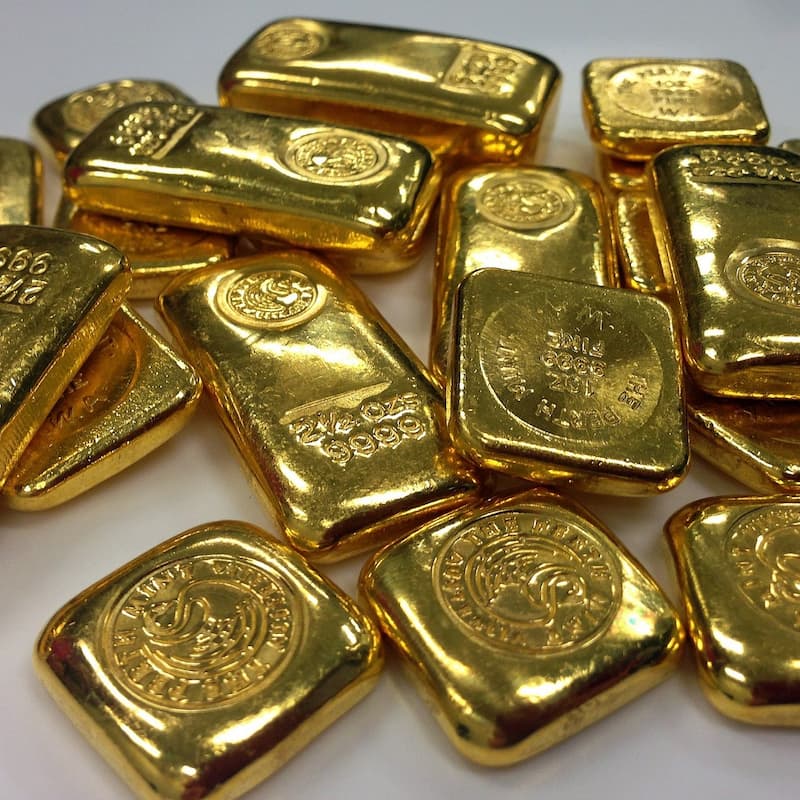
Although the gold price is down from its pre-US/Iran-war levels, Lombard Odier, together with other wealth managers, has said that it is remaining constructive on gold. It is also keeping an overweight position on emerging market equities and is staying neutral on fixed income.
Although prices have been choppy, the gold market hasn't lost its shine for wealth managers. Dr Luca Bindelli, head of investment strategy at Swiss private bank Lombard Odier is maintaining an overweight position on the yellow metal and is sticking to a negative view of the dollar.
“We continue to hold the precious metal in portfolios as an important diversifier – both as a hedge against renewed equity volatility, and as protection against geopolitical uncertainty,” Dr Bindelli said this week.
His stance was echoed this week by Mark Haefele, chief investment officer at UBS Global Wealth Management. “We like gold and commodities as diversifiers, and think investors should focus on diversifying both with, and within, alternatives,” Haefele said in a note.
German asset manager DWS also views the recent price declines in gold more as an opportunity to enter than as a signal to exit over the medium to long term. Demand from central banks is likely to remain strong, as many are seeking to partially replace their dollar reserves with gold.
While gold has not always lived up to the billing of being a negatively correlated asset – it is sometimes sold to pay for larger margin calls, for example – it is generally viewed as a safe asset for giving "ballast" to portfolios. With geopolitical and economic volatility in focus (conflict in the Gulf, the war in Ukraine, and persistent inflation), gold has reminded investors of its uses.
Growth can rise further
Chi Lo, senior market strategist, Asia Pacific, BNP
Paribas Asset Management, highlighted that barring a
prolonged conflict, the inflation and energy shocks will be
transitory with a negative impact on growth beyond the short-term
due to a destruction of confidence and purchasing power. “At some
point, the market’s focus will turn to growth risks and rate cuts
again. The gold price will then rebound. Central bank purchase
will remain a long-term support for gold, prompted by
geopolitical tensions and an increase in the incentive for
de-dollarisation amid concerns about dollar debasement,” Lo said.
The World Gold Council’s first quarter report for 2026 reveals that total quarterly gold demand reached 1,231 tonnes, a 2 per cent increase year-on-year. While volumes increased modestly, the value of demand surged to a record $193 billion, up 74 per cent year-on-year.
Around the world, retail investors were drawn to gold’s price momentum and safe-haven appeal, driving bar and coin demand up 42 per cent year-on-year to 474 tonnes, the report shows. Demand in China surged 67 per cent year-on-year to a record 207 tonnes. Other Eastern markets, including India, South Korea and Japan, also saw an increase in bar and coin buying, contributing to the ongoing structural shift in gold demand. Bar and coin demand was also supported by strong growth in the US and Europe, up 14 per cent and 50 per cent respectively, the report adds.
Fixed income, equities
Bindelli holds an equity overweight in portfolios via his
preference for emerging market stocks which offer the most
attractive earnings growth and more valuation support than their
developed peers.
The duration of the Strait of Hormuz disruption remains a crucial factor for the outlook. Although China, South Korea, and Taiwan are heavily reliant on Gulf region energy imports, this week Lombard Odier said they have significant stockpiles, financial resources, and clean tech solutions to shield consumers and businesses from shortages for a few months.
This has been echoed by Edmund Shing at BNP Paribas Wealth Management who remains positive on emerging market equities and gold, despite volatility arising from the Middle East conflict.
In developed markets, Lombard Odier retains an overweight position on Japan and an underweight position on the UK. Haefele keeps an attractive rating on US equites, with a year-end S&P target of 7,500. On a sector basis, Haefele favours consumer discretionary, financials, healthcare, industrials, and utilities. He recommends that investors hold a diversified exposure to the artificial intelligence theme across sectors and geographies.
In fixed income, Bindelli keeps his exposure neutral overall and continues to favour emerging market bonds over developed markets. He expects bonds to deliver improved performance in the coming months, even if still lower than equities. He also likes UK gilts, like other wealth managers, and German Bunds and sees scope for improved gains in Swiss bonds. Haefele sees opportunity in short- and medium-duration quality bonds.
It is sometimes argued that gold does not generate a yield, which is precisely why it counts as a form of money. The picture, as argued by firms such as Monetary Metals, is more complicated. The firm has been developing the gold yield marketplace™, not for buying and selling gold but to connect gold investors seeking a yield with corporations and institutions who need gold capital and can pay in gold for it. (See an interview here.)