


Alt Investments
The UK-China Whisky Deal Adds To Trade Momentum
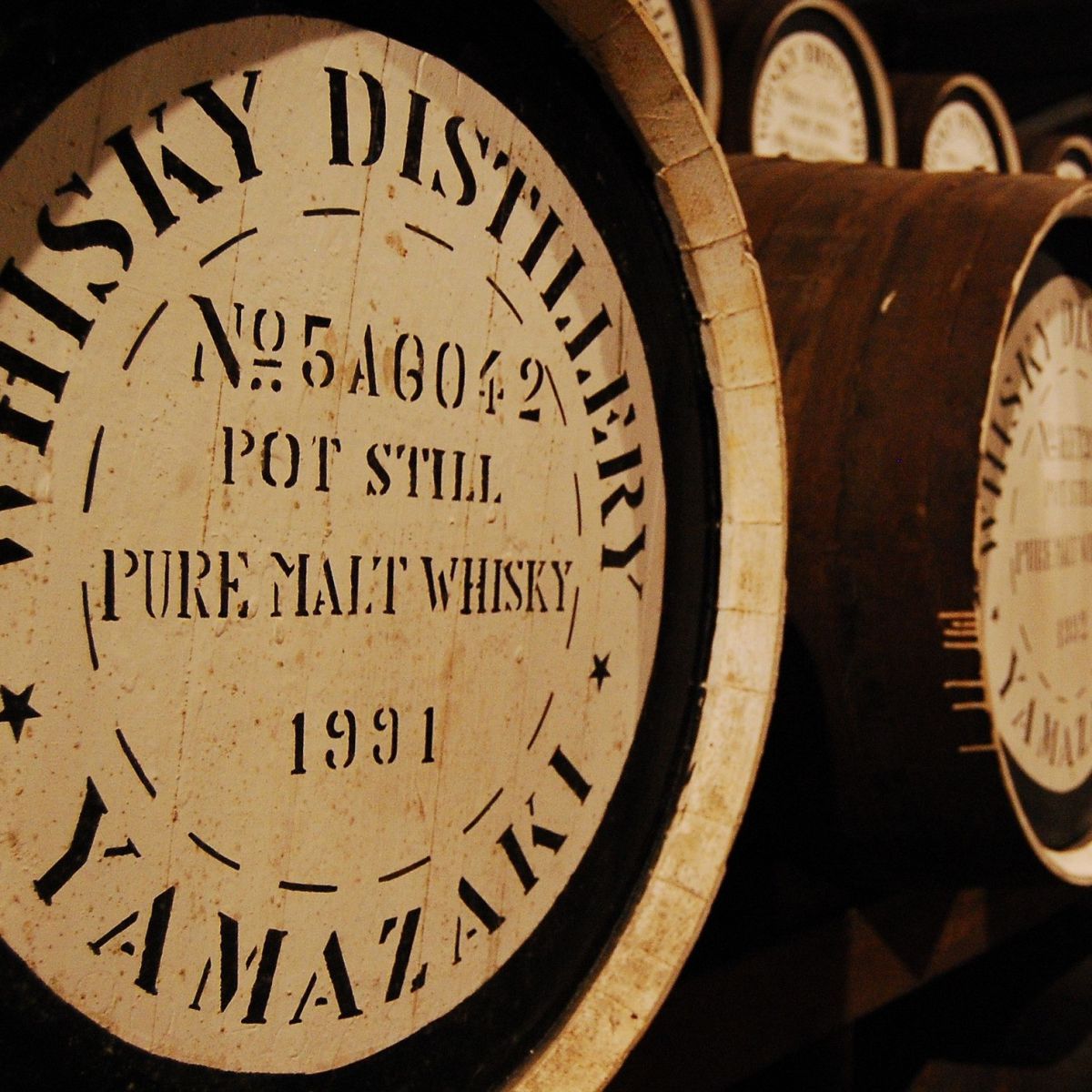
UK Prime Minister Sir Keir Starmer and Chinese President Xi Jinping said that they had reset economic ties last week, including a tariff cut on Scotch whisky exports to China as well as improved access for Chinese exporters of high-value goods. Those operating within the Scotch whisky industry discuss the impact.
Last week, UK Prime Minister Sir Keir Starmer and Chinese President Xi Jinping agreed that China would cut import tariffs on British whisky from 10 per cent to 5 per cent.
The deal, signed during the Prime Minister’s visit to Beijing, is estimated to be worth £250 million ($344 million) to the UK economy over the next five years. China is currently Scotch whisky’s 10th largest market by value, and the tariff reduction will help Scottish distillers compete more effectively.
Those operating within the Scotch whisky industry view the move as a positive step towards improving market access in one of the world’s most important premium spirits markets, at a time when global trade conditions remain volatile. It follows the UK-India trade deal which cut Indian import tariffs on Scotch; it is estimated that it will increase sales to India by up to £1 billion a year. That deal is expected to grow the Scottish economy by £190 million annually.
While seemingly a "niche" area, exports of whisky to China – a country that has a thirst for the product – is important for the UK at a time when the domestic economy has been lacklustre. China became the world’s fourth largest whisky market by value in 2023 – up from sixth in 2022, according to China-Britain Business Focus in May last year. It cited figures from Euromonitor International, stating that China's whisky sales are expected to double from £920 million in 2023 to £1.8 billion by the end of 2025. In 2022, Asia overtook the European Union in whisky sales.
Starmer's visit to China was designed to improve relations with the Asian giant at a time when they have been fraught at times, for instance over accusations of China spying on the UK, and its domestic human rights record. It is a difficult balancing act for Starmer; the government is trying to diversify its economic relations as those with the US have turned more difficult amid arguments between London and Washington DC over President Donald Trump's stance on Greenland. Trump has also reportedly criticised the UK for enabling China to build a large new embassy in the City of London, and the UK's agreement to transfer ownership of the Chagos Islands in the Indian Ocean to Mauritius, and potentially open up the territory to Chinese influence.
However, the prospect of more whisky sales appears to have drawn cheers from the Scottish sector.
“Our whisky distilleries are the jewel in Scotland’s crown. Having already slashed tariffs on whisky exports to India, we’re now doing the same with China – proof that our pragmatic, hard-headed international engagement brings benefits at home,” Starmer said.
“The reduction in tariffs on Scotch whisky from 10 per cent to 5 per cent is a significant diplomatic win and a meaningful signal at a time when global trade conditions remain unpredictable,” Paul Kopec, CEO of whisky asset management firm Speyside Capital, said. “While a 5 per cent swing may sound relatively modest to some, in premium spirits even small tariff reductions can have a significant impact on pricing, distribution appetite, and long-term market confidence.”
“China has the world’s second-largest economy by nominal GDP, and remains strategically important,” Kopec continued. “It’s a premium-led, status-driven market where Scotch whisky is consumed as a symbol of heritage, success and international credibility. Lower tariffs like those announced make it easier for brands to invest, build presence, and commit to the market over the long term.”
“When you view China’s move alongside the UK-India trade deal, the direction of travel is clear,” he added. “Asia is becoming structurally more accessible, and while global demand for premium and ultra-premium Scotch decreased in 2025, these small things can spur growth. For distillers, that supports export increases. For investors, it reinforces why mature whisky stock remains such a resilient, globally diversified asset.”
Investment in whisky – particularly through casks – is a recognised alternative investment class, often used for portfolio diversification due to its low correlation with stock markets. It is considered a tangible asset that can provide on average 8 per cent to15 per cent annual returns over a five to 10-year period, acting as a hedge against inflation and economic volatility.
Kopec highlighted how Scotch whisky is often caught up in the crossfire of geopolitics, so it’s refreshing to see a trade decision that actively removes friction rather than adds it. “Stability and access matter enormously in an industry that plans decades – rather than quarters – ahead,” he said.
This was echoed by Mark Kent, chief executive of the Scotch Whisky Association (SWA), who said China is a priority growth market for many Scotch whisky producers, which in recent decades has developed into a knowledgeable and premium focused market with a strong appreciation of Scotch.
“A reduction in whisky tariffs from 10 per cent to 5 per cent is really positive but it should be seen in a wider context,"Simon Aron, CEO of Cask Trade, added. "There is still a 60 per cent import and alcohol duty for bottle of single malt whisky that comes into China which perhaps outweighs the cut in the tariff. Compared with neighbouring markets such as Hong Kong, Macau, Taiwan and Singapore, China remains a high-duty environment for spirits. That said, something is better than nothing. In the near term, any marginal easing will benefit the bigger volume blended scotches such as Johnnie Walker and Chivas Regal - those that have the presence to leverage these immediate price advantages at scale. For wider single malt and cask whisky, the benefits are not so impactful in the short term. Significant change would be driven if China reduced its import and alcohol percentage, similar to what happened in Hong Kong last year.”
“This is another tremendous result delivered by the UK Government for Scotland’s world-renowned whisky industry. From Delhi to Beijing, this government is opening doors for Scottish exporters and putting money in the pockets of working people across Scotland,” Secretary of State for Scotland Douglas Alexander said.
Other aspects of the deal
In the energy sector, British firm Octopus Energy is entering the Chinese market through a partnership with local company PCG Power to develop a digital platform for trading electricity. The project aims to improve efficiency in the power system and support China's efforts to increase the use of renewable energy.
The reset also secures access for Chinese exporters of high-value goods such as electric vehicles, solar panels and clean energy, while creating opportunities for Chinese investment in British services, finance and green tech.
The move comes after Canada and China struck a trade deal earlier this month. Under the move, China’s president Xi Jinping and Canadian prime minister Mark Carney announced lower tariffs. China is expected to reduce levies on Canadian canola oil from 85 per cent to 15 per cent by 1 March, while Ottawa has agreed to tax Chinese electric vehicle imports at the most-favoured-nation rate of 6.1 per cent. Carney has been trying to diversify trade away from the US, following the uncertainty caused by Trump’s on-off tariffs. The deal could also see more Chinese investments in Canada. See more here.