


Tax
Switzerland's Lump Sum Tax Regime Becomes More Onerous
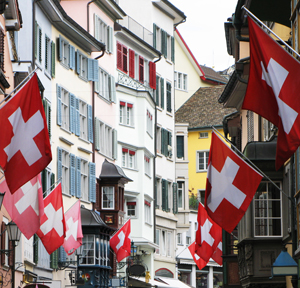
The Swiss authorities are changing the lump sum tax system in the country, which could end up costing new residents twice the amount they currently expect to pay. Law firm Lane-Smith & Shindler examines the issue.
Proposed changes to Switzerland’s lump-sum tax could end up costing new residents up to double the amount they currently expect to pay. With the changes looming, Tim Urquhart of legal practice Lane-Smith & Shindler’s associated Zurich office urges those wishing to take advantage of the generous tax regime to act now and make arrangements with the Swiss authorities.
The lump-sum tax gives new Swiss residents the opportunity to pay a single sum, which will be made in lieu of tax in each year. (Swiss nationals who have lived outside Switzerland and paid no tax there for at least 10 years are also eligible).
The tax is attractive because those that qualify for the Swiss lump-sum tax pay a relatively generous single lump sum instead of being taxed on worldwide assets and income.
The arrangement is only open to those who agree not take any gainful employment or maintain businesses under which they receive income in Switzerland.
This is all about to change as The Swiss Federal Council voted yes to a proposal to change the law regarding the so-called “lump-sum” regime (Pauschalreglung (German) and Imposition Forfaitaire (French)), which was filed on 8 September 2010 – it is a vote that will have notable ramifications for those looking to take Swiss residency with a view to taking advantage of the lump-sum tax.
A brief introduction to tax in Switzerland
Switzerland taxes worldwide income and assets in the hands of its residents. Taxation is levied through income tax, wealth and asset taxes and Capital Gains Tax (on real estate only).
One factor often overlooked by foreigners is that Switzerland is a federation of 26 more or less autonomous cantons, which represent the most influential body politically. In many respects the Federal Government can only act by consent of the cantons any one of which in theory could withdraw its authority at any time. The taxation system is multi-level and not only the Federation but also the cantons and municipalities all levy tax on income. Exclusively, some cantons and municipalities levy wealth/asset taxes. Where levied, wealth tax is low and there are several cantons and municipalities that do not levy it at all.
With two exceptions there is no CGT in Switzerland. Those are capital gains on the sale of real property or where a taxpayer qualifies as a “dealer in securities” (which has a very wide definition).
As a result of the cantonal autonomy, the cantons’ tax laws and rates vary widely so that for example the average overall tax burden in Geneva (Canton Geneva) is approximately 45 per cent of income whereas in Wollerau (Canton Schwiez) it is only 20 per cent. These differences also affect lump-sum taxation.
Lump-sum taxation currently
The federal and cantonal tax laws all provide for lump-sum taxation and it is possible to negotiate it in all cantons except Zurich, which recently voted not to allow any further lump-sum taxation arrangements.
The basis for the lump-sum taxation is that tax is assessed on the basis of a single lump-sum of income and wealth which is agreed with the local tax authority regardless of the actual income and wealth of the tax payer to whom it is granted. This lump-sum is then submitted to tax at the appropriate rates for the canton and municipally, and also to the single rate federal income tax.
The lump–sum as calculated above is of course “hypothetical.” It is assessed by reference to the general cost and, (more recently) style of living of the taxpayer. Currently (and as a rule of thumb only) the income element is calculated by taking the rental actually payable by the taxpayer or (where the house is owned) the notional rental value assessed on the house and multiplying this by five. Wealth and asset taxes are left to the cantonal authorities and in many cases where a lump-sum arrangement is agreed there will be no charge to wealth tax.
The background to changes
Internal political pressures have resulted in the proposed changes, but as lump-sum taxation is a considerable source of income to the government and additional contributions to the overall Swiss economy are substantial, it is not expected and it is not intended that it will be abolished. Out of a population of some 7 million there were 5,003 lump-sum taxpayers in 2008 contributing SFr578 million to the government’s income.
There are no statistics to show the economic contribution to the overall economy but it is estimated that lump-sum taxpayers contribute significantly to employment figures in Switzerland particularly in some of the “poorer” cantons amongst other non-tax contributions.
Currently the average lump-sum arrangement that can be negotiated varies between SFr100,000 per year and SFr200, 000 per year.
Proposed changes
The proposed changes are:
· Calculation of the lump-sum will be based on 7x the rent or rental value (as opposed to 5x)
· Lump-sum taxation will no longer be available to any Swiss National
· The minimum income for lump-sum taxation at federal level will be SFr400,000 (today SFr200,000)
· Cantons and municipalities will be obliged to levy income tax and wealth tax to a certain minimum level (to be decided by the canton/municipality).
· A transition period of five years will apply during which all existing lump-sum arrangements will be brought up to the new standards.
Although the changes are not final, and, given the pace at which new legislation normally progresses it is not expected that they will be in force until mid 2011 or 2012. However it is expected that they will be introduced and that they will, when in force, increase the cost of any lump-sum arrangement by between 50 per cent-100 per cent on average.
Action to be considered
It is not expected that these changes will cause those who are contemplating moving to Switzerland to reconsider.
However, it will be worthwhile for anyone considering doing so to start his or her negotiations with the authorities as soon as possible. This should ensure that he or she will have concluded their negotiations before the new provisos come into force so that he or she can benefit from the five-year transition period.
It is also even more important once the new provisions are introduced to calculate the difference between a lump-sum arrangement and entering Switzerland as a “normal” taxpayer as tax rates in Switzerland even for those who are taxed on their worldwide income and assets are not high by comparison with other European countries. Moving to the “right” canton where rates are low can often be more advantageous than negotiating a lump sum.
Tim Urquhart can be contacted at DD: 0041 43 500 3873 or timurquhart@lssgmbh.ch