


Strategy
Singapore's Growing Market For Wealth-Linked Life Insurance – In Conversation With Singlife
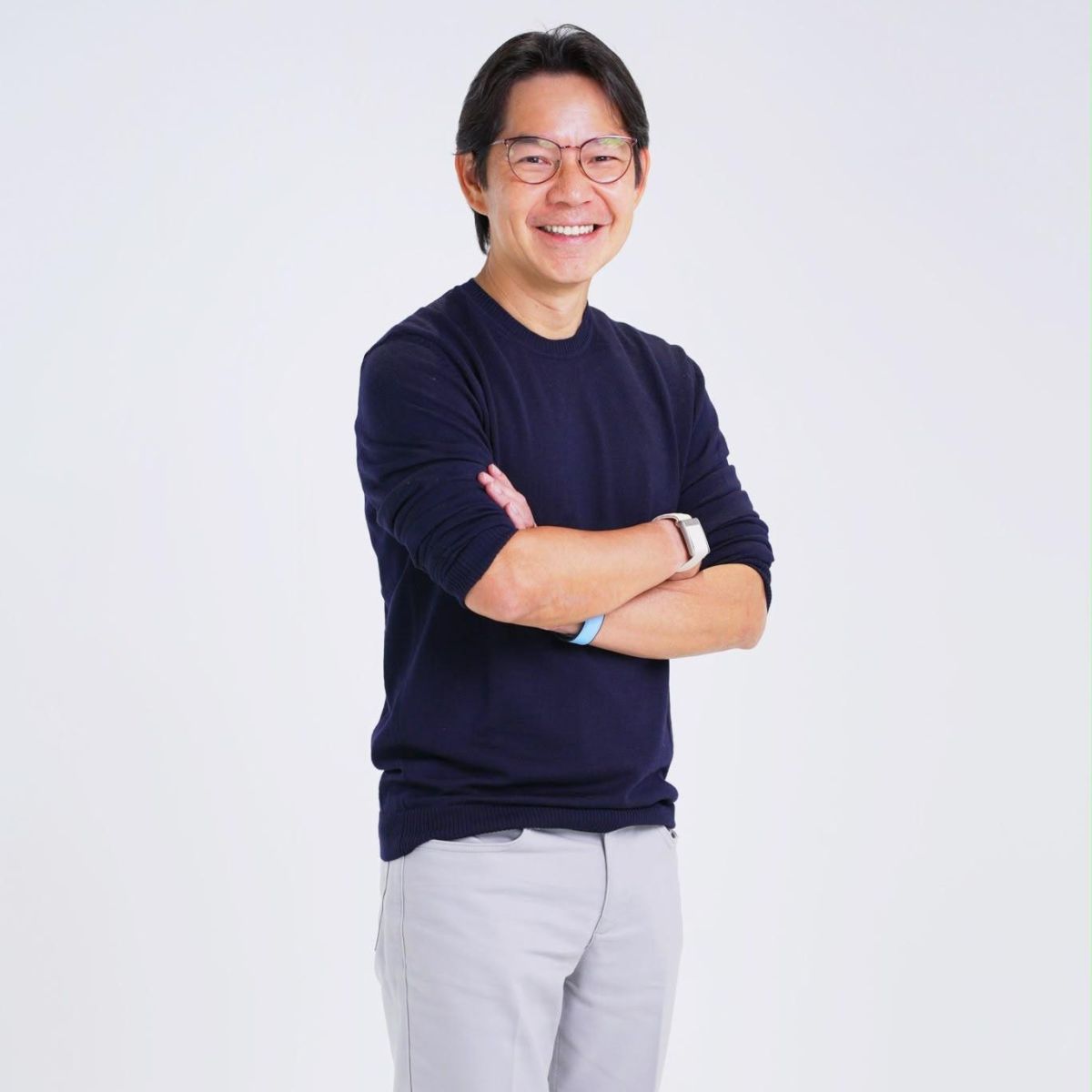
There has been a trend of new life insurance policy structures in Singapore being aimed at affluent and HNW individuals. This news service talks to Singlife about what's happening.
As published here, this news service is looking at the life insurance sector in Singapore and the wider region, seeing how wealth management fits in. Among the firms we spoke to was Singlife. We interviewed Steven Ong (main picture), managing director, HNW, at the business.
WBA: There appears to be
something of a trend of life insurance policies being developed
and grown in the Singapore/APAC market which
are specifically focused on wealthy
clients.
Steven Ong: The emerging high net worth segment
is projected to be the fastest-growing segment in Singapore over
the next five years, driven by longer lifespans, longer working
lives, intergenerational wealth transfers and Singapore’s
position as a stable, well-regulated wealth hub. This is
sustaining demand for asset growth, preservation and legacy
planning solutions across Singapore and the region. As this
segment expands and its needs become more complex, financial
institutions in Singapore and the region are serving it more
intentionally.
These clients are using insurance for purposes beyond protection, including business continuity, succession planning, as well as estate equalisation for fair and prompt asset distribution. There is also a rising demand for products that offer clients more control and flexibility over how wealth is preserved and transferred across generations.
Insurers are responding with solutions that support different affluent and HNW priorities across the wealth journey, from accumulation to transfer. For instance, our recently-launched Singlife Heritage Reserve is a participating whole of life insurance plan that provides potential for long-term growth through non-guaranteed bonuses.
For a single-premium policy, the illustrated policy value could double by the end of Year 14 at the higher illustrated rate of return of 7.50 per cent per annum, or by the end of Year 20 at the lower illustrated rate of 5.25 per cent per annum. While these illustrated returns are not guaranteed, they show how the plan can support wealth accumulation while giving individuals greater control over how their wealth is passed on.
This year, we also introduced Singlife Legacy Indexed Income, a whole of life, nonparticipating universal life plan which offers growth potential alongside highly customisable income streams, while also serving as a legacy transfer instrument, and Singlife Heritage Income, which provides a steady stream of income for life while enabling wealth to be passed on.
WBA: What have been the characteristics of this
life/wealth market?
Steven Ong: The market has evolved significantly
and has become increasingly sophisticated and customer-focused.
Customers today have access to a broader range of solutions,
greater product innovation and clearer information to support
their decision-making.
We also see growing expectations from customers for transparency, flexibility and customisation, especially for HNW individuals.
More “internationally” wealthy families and individuals, including those residing in Singapore, want choices, including the ability to handle succession, liquidity, etc.
WBA: Do you think there is more need to educate
people, and their financial advisors, about the benefits that
life insurance structures can bring? Is there a gap in financial
awareness and what can be done about it? Are you devoting
resources to marketing and brand awareness?
Steven Ong: Yes, we believe there is a significant
education gap when it comes to the potential for life insurance
structures to address the needs of wealthy individuals, such as
succession planning and liquidity.
Traditionally, life insurance has been viewed primarily as a protection solution. However, increasingly savvy families are using it as part of a broader wealth planning toolkit to help address liquidity, estate equalisation, business succession and wealth transfer objectives. There remains an opportunity to raise awareness among both clients and financial advisors about the role insurance can play beyond risk protection.
While life insurance can support various objectives, these are rarely straightforward product decisions. Trusted advisors and relationship managers play a critical role in understanding each family’s circumstances, intentions and relationships, and in recommending appropriate solutions.
At Singlife, we focus on equipping our advisor and distribution partners through training, thought leadership and client engagement. Products are increasingly a delivery mechanism for advice, not a standalone sale.
WBA: How “cross-border” can life insurance-based
policies be, and is there a risk that certain countries
might try to curb offshore finance?
Steven Ong: Life insurance plans for HNWIs are
increasingly designed to support the growing trend of
“cross-border” families and lifestyles, where family members may
live in different countries, while their country of residence may
not always be where their businesses generate income, nor where
their children reside.
Under these circumstances, flexibility and long-term legacy planning are crucial. These were therefore key considerations behind the development of Singlife Heritage Reserve. The plan supports wealth accumulation and transfer across generations up to 388 years, while providing greater control over how the policy and its benefits are managed as circumstances change.
Internationally dispersed families may also value the option of receiving eligible payouts and withdrawals in different currencies, for instance, Singapore dollars, US dollars, sterling, euros, Australian dollars and Hong Kong dollars.
Singapore is well positioned as a destination for wealthy individuals seeking life insurance solutions; it is supported by an established legal system, a stable economic environment and a robust regulatory framework. Competition among insurers also promotes product innovation, choice and competitive premiums for customers. While life insurance can help increasingly global families with wealth planning needs, tax and legal considerations vary across jurisdictions, so individuals should seek professional advice based on their personal circumstances.
WBA: Who do you see as your main
competitors?
Steven Ong: The wealth and legacy planning space
in Singapore is well-served by a range of established insurers
and financial institutions. Rather than focusing on competitors,
we focus on understanding evolving customer needs and
delivering solutions that provide meaningful value.
At Singlife, we aim to differentiate ourselves through customer-centric product design, innovation and flexibility, particularly in areas such as wealth accumulation, legacy planning and adapting to changing life circumstances. Ultimately, we believe that customers benefit from a competitive market that continues to raise standards of innovation and service across the industry.
WBA: Have you learned from other life insurance
markets, such as in the US?
Steven Ong: While every market is different,
there are useful lessons from mature life insurance markets such
as Japan, particularly as Singapore’s population ages.
One is that insurance increasingly needs to go beyond providing a payout. Sumitomo Life, our parent company, has developed services in Japan that support customers with broader long-term care needs, including care consultations and support for families. This reflects a more holistic approach to helping customers navigate the practical and financial implications of ageing and care.
We have adopted a similar approach with some of our wealth and legacy solutions, recognising that customers’ needs can change significantly over the course of a long-term policy. Singlife Heritage Reserve, for instance, includes a Care Support Income Option under its Prestige tier, which provides a source of liquidity upon diagnosis of a specified health condition. In 2023, we also introduced Singlife Care Collab, a one-stop health services hub connecting customers to trusted healthcare providers for the right care, at the right time so that they are supported across every stage of their health journey.
Another lesson is the importance of planning for longer lives. Sumitomo Life has explicitly focused on supporting life planning in the era of the “100-year lifespan,” recognising that people’s needs continue to evolve across different life stages. As people live longer, their retirement, health and care needs increasingly intersect, so solutions need the flexibility to adapt as their circumstances change over time.
For Singlife, that could mean designing greater flexibility into our solutions, giving customers more choice over how and when they access income, protection and their accumulated wealth as their needs evolve over a longer lifetime. For us, the lesson is not necessarily to replicate what Japan has done, but to consider what we can learn from a market that is further along in responding to longevity and ageing and apply those insights in ways that are relevant to Singapore.