


Surveys
Longevity, Health Spans And Wealth In Motion – In Conversation With Manulife
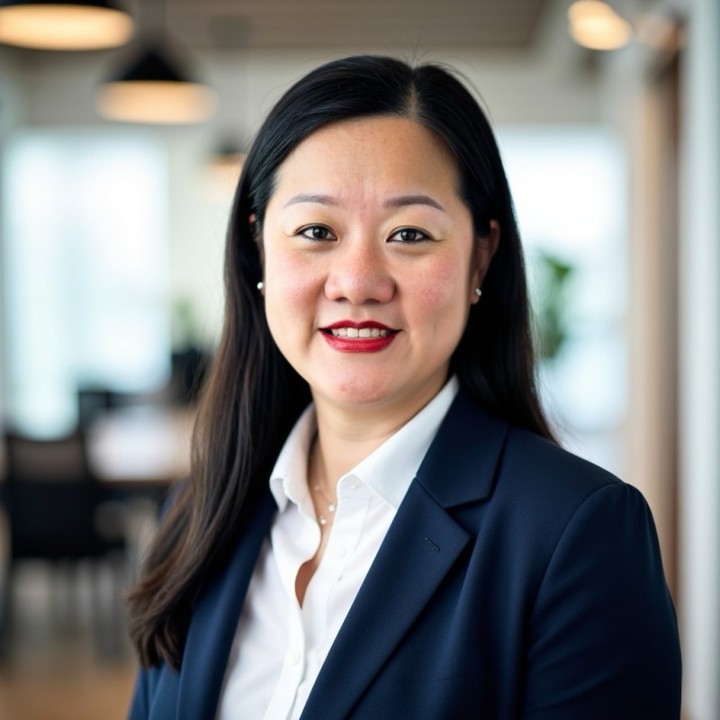
As part of a series examining the work of life insurers for affluent and HNW clients in Singapore, we talk to a senior executive at Manulife about its recent research and the implications.
As published here, this news service is looking at the life insurance sector in Singapore and the wider region, seeing how wealth management fits into the picture. One of the firms interviewed was Manulife and we spoke to Bonnie Qiu (main picture), chief executive, global HNW and chief partnership distribution officer, Asia, for the firm. We spoke to her about the firm’s recent research, for example, its Manulife Care Survey 2026, and its New Fluidity research into affluent and HNW individuals’ perspectives.
WealthBriefingAsia: Please talk about your
recent research and what has struck you most about
it?
Bonnie Qiu What surprised me most was not
how much people care about legacy, but how differently they now
define it. Increasingly, legacy is being measured by the ability
to preserve independence rather than simply pass on
wealth. In the Manulife Asia Care Survey 2026, 82 per cent
of respondents across Asia said their independence was the most
meaningful legacy they could leave their families. Respondents
also expect to allocate 68 per cent of their financial assets
towards maintaining their own independence, leaving 32 per cent
for traditional inheritance.
What I found even more striking is the disconnect between aspiration and preparedness. Our New Fluidity research shows that HNW individuals are living longer, more mobile and increasingly multi-phase lives, yet only 17 per cent have a fully-integrated wealth plan covering investments, tax, succession, legal considerations and family governance.
What makes this especially significant is that one of the largest intergenerational wealth transfers in Asia is already underway, yet relatively few families have integrated plans capable of adapting as family needs, market conditions and life circumstances evolve. This creates what we might call a legacy gap between families' aspirations and their level of preparedness.
What was less surprising was the growing desire for flexibility. Our New Fluidity research found that 65 per cent believe adaptability and optionality are more important to long-term financial security than wealth accumulation alone. The priority is no longer simply building more wealth, but ensuring that wealth can evolve alongside changing health needs, family priorities, careers and geographic mobility.
WBA: Longer lifespans and, just as
importantly, “healthspans” mean a lot of different things. From
an investment point of view, how does this play out?
Bonnie Qiu: The more important shift may not be
longer lifespans, but longer healthspans. People increasingly
expect to remain active, productive and financially engaged for
much longer, and that is fundamentally changing how wealth needs
to work.
Traditionally, wealth planning was built around a relatively linear journey of accumulation, retirement and wealth transfer. Today, that model is becoming less relevant. Our New Fluidity research found that only 35 per cent of HNW individuals plan to retire at or before the traditional retirement age. Many are instead embracing what we call "portfolio lives," dividing their time, energy and capital across multiple pursuits, whether through entrepreneurship, investing, philanthropy, advisory work or family leadership. Retirement is increasingly being redefined as an extended stage of productivity rather than a traditional endpoint.
Rather than supporting a single retirement phase, wealth now needs to support multiple chapters of life, each with different income, liquidity, protection and legacy requirements. That calls for an appropriate balance of long-term growth, sustainable income, downside resilience and accessible liquidity.
Longevity also creates new financial demands. The Asia Care Survey found that adults across Asia expect care or financial support for 13 to 14 years in later life, rising to 17 years in Hong Kong, underscoring the importance of healthcare funding, protection against medical inflation and sustainable sources of income.
WBA: What is the impact of this on
investment?
Bonnie Qiu: Longer and healthier lives can
extend investment horizons, but that does not necessarily mean
investors should simply take more risk. The more important
consideration is that risk needs to be managed over a longer
period and across a wider range of life events. If people expect
to remain productive for longer, their financial needs are also
likely to become more varied. They may pursue a second career,
start a business, support family members, fund healthcare needs,
or take advantage of new opportunities later in life. As a
result, portfolios need to provide both long-term growth and
sufficient flexibility to respond to changing circumstances.
This also has implications for asset allocation. Rather than focusing solely on maximising returns, investors increasingly need portfolios that can deliver growth, generate sustainable income, provide downside resilience and preserve access to capital when it is needed. The objective is to build resilience across multiple phases of life rather than optimise for any single point in time.
Mobility is another important consideration. More than half (52 per cent) of affluent individuals surveyed across Asia already hold assets or residency across multiple jurisdictions, while nearly two-thirds (65 per cent) are actively developing contingency plans for geopolitical, regulatory and tax uncertainty. Asset allocation today therefore needs to be considered alongside currency exposure, jurisdictional diversification, ownership structures and the practical portability of wealth.
WBA: If adult children are less willing or able
to look after older relatives, what does that mean for investment
and financial management?
Bonnie Qiu: We are seeing a decisive shift from
dependence on family support towards greater self-reliance.
According to the Asia Care Survey, only 19 per cent of adults
expect to rely on financial support from their children later in
life, reflecting a growing desire to remain independent and avoid
becoming a burden on loved ones.
This reinforces the need to plan proactively for healthcare, long-term care and later-life living expenses rather than assume those needs will be met by family members. Funding longevity is becoming a central component of financial planning.
From an investment perspective, this trend is also likely to drive continued demand for senior care, private healthcare, technology-enabled living and other longevity-related services, creating opportunities across the broader longevity economy.
WBA: Will these changes affect the composition
of housing stock, such as more flats, different building formats
or more protected communities?
Bonnie Qiu: Housing will increasingly need to
support longer, healthier and more independent lives.
With 90 pe cent of people across Asia saying they want to remain self-sufficient for as long as possible, demand is likely to grow for accessible homes, integrated healthcare services and residential settings that keep people connected to business, family and community life.
This may encourage greater adoption of age-friendly design, smart-home health monitoring, medical concierge services and mixed-use longevity communities, rather than a single model of traditional retirement housing.
WBA: How do you see the balance
between asset classes developing over the next five to 10
years?
Bonnie Qiu: Many affluent families already have
significant exposure to a business, sector, geography or
currency. Against a backdrop of geopolitical, regulatory and
market uncertainty, diversification matters more than ever. In
our New Fluidity research, 52 per cent of affluent individuals
surveyed across Asia hold assets or residency across multiple
jurisdictions, while 65 per cent are developing contingency plans
for geopolitical, regulatory and tax uncertainty.
Portfolios therefore need a clearer division of labour. Growth assets can drive long-term capital appreciation; high-quality income assets can provide stability and cash flow; real assets and private markets can broaden diversification; and protection solutions can create dedicated liquidity for estate obligations, succession needs and family commitments.
Increasingly, insurance is being viewed not simply as a protection product but as a complementary, multi-purpose asset within a family's broader balance sheet. Rather than replacing traditional investments, it can enhance portfolio resilience by providing downside protection, dedicated liquidity and a contractual long-term benefit.
WBA: How can insurance and related areas adjust
to longevity changes? Will this mean new kinds of
offerings?
Bonnie Qiu: Historically, insurance has focused
on providing financial protection when something goes wrong. As
people live longer and seek to remain healthy, independent and
financially resilient for longer, insurance increasingly needs to
evolve from a passive safety net into a proactive partner across
health, protection and longevity.
The opportunity is particularly clear in preventive healthcare. Our Asia Care Survey found that 84 per cent of adults recognise that early health screening can help preserve long-term independence, yet only around half undergo regular comprehensive check-ups. This gap between awareness and action highlights an opportunity to make prevention more accessible, relevant and engaging.
In response, we are seeing insurance evolve beyond traditional protection to encompass broader health and wellness ecosystems. This includes healthcare partnerships, preventive screening programmes and solutions that integrate health, protection and wealth planning. Examples include access for eligible customers in selected Asian markets to Guardant Health's liquid-biopsy technology for early cancer detection, as well as ManulifeMOVE, which rewards healthy behaviours with relevant benefits.
For HNW clients, this evolution extends even further. Increasingly, clients are looking for integrated solutions that combine legacy planning, wealth preservation and access to premium health and wellness services. Solutions that offer multi-currency protection alongside benefits such as Prenuvo non-invasive whole-body MRI scans and Teladoc global specialist concierge support illustrate how insurance is becoming more holistic, personalised and prevention-oriented.
WBA: What challenges do wealth advisors face in
this trend?
Bonnie Qiu: The greatest challenge is that
clients live integrated lives but often receive fragmented
advice.
Investment decisions, healthcare planning, succession, tax and family governance are deeply interconnected, yet they are typically handled separately by different specialists. Our New Fluidity research found that 72 per cent of HNW individuals said they would benefit from a single trusted advisor who could help coordinate their overall wealth strategy, yet only 17 per cent have a fully-integrated wealth plan.
Another challenge is engaging the next generation earlier: 60 per cent of HNW respondents say future heirs have little or no involvement in wealth planning discussions.