


Alt Investments
Lambs, Not Chips: Where Agricultural Income Really Comes From
Market selloffs send investors looking for assets that don’t move. The better question is whether an asset’s income depends on the same things as everything else in the portfolio, and how its risks are managed.
The following article is from Luke Ferguson, CEO, of Ferguson Hyams Investment Management, an Australian asset management business. It addresses the investment case around farmland and agriculture. The usual editorial disclaimers apply to commentaries from outside organisations. To comment, email tom.burroughes@wealthbriefing.com and amanda.cheesley@clearviewpublishing.com
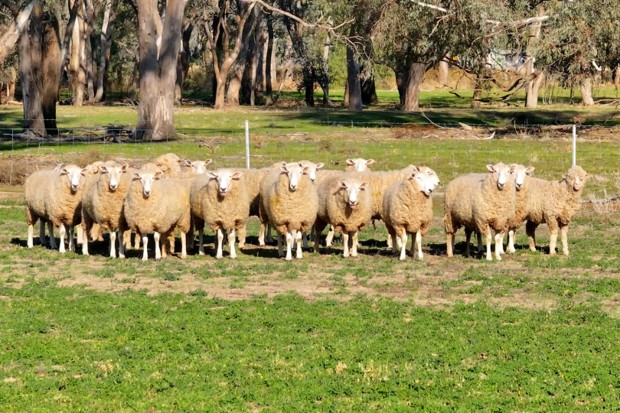
Lambs on pasture in Central West New South Wales. Photo: Ferguson Hyams.
On Thursday 5 November the S&P 500 fell 4.36 per cent and the Nasdaq Composite 5.52 per cent. That was the Nasdaq’s biggest one-day fall since the tariff shock of April 2025, and it left the index more than 10 per cent below its record close of 6 October.[1]
The Philadelphia semiconductor index lost 12 per cent in a session, about $3 trillion of value disappeared from S&P 500 companies, and the VIX volatility index rose by around 70 per cent to above 28.[1][2]
The causes were concentrated: fears of tighter regulation of artificial intelligence and data-centre construction after the US midterm elections, a disappointing result from a large chipmaker, and hedge funds selling the year’s most crowded trade to lock in their gains.[1][2]
Days like this start a predictable conversation in wealth management. Clients ask what else they could own, and real assets, farmland among them, come up because they didn’t move on Thursday. That is true. It is also the moment for a careful adviser to slow down, because the reason an asset didn’t fall yesterday matters more than the fact that it didn’t.
Not moving is not the same as not falling
Farmland doesn’t trade on a screen. The institutional benchmark,
the NCREIF Farmland Property Index in the United States, is built
from appraisals made a few times a year, so it cannot show a bad
Thursday even when one would be justified. Some of the asset
class’s smoothness comes from how it is valued, not from what it
is. And it does fall: the index returned minus 1.0 per cent in
2024 and 0.2 per cent in 2025, when a 3.05 per cent income return
was almost entirely offset by a 2.8 per cent decline in
values.[3][4] Anyone presenting farmland as a place where nothing
goes down is selling something.
The other side of not trading is not being able to sell. On Thursday an investor in a technology fund could get out at a bad price; an investor in an agricultural fund could not get out at all. For patient capital that is a feature, because nobody is forced to sell at the bottom. For a client who may need the money, it is a real cost, and it belongs in the suitability conversation before anything else.
What is genuinely different is the income
Where agriculture does differ from Thursday’s market is in what
pays the income. The S&P 500’s fall was a repricing of
expectations about artificial-intelligence investment, regulation
and interest rates. The income from an operating farm comes from
selling food, and the price of that food depends on demand from
China, the US, the Middle East and South-East Asia, on the
season, and on the Australian dollar. Australia, on ABARES’
forecasts, is the world’s largest sheep meat exporter.[5] Lamb
and mutton exports both set records in 2024, and export value
rose 17 per cent to A$5.2 billion.[6] None of those drivers moved
on Thursday because a chipmaker missed its forecasts.
Different does not mean immune
Agriculture has its own exposures, and some of them are live now.
Brent crude was trading near $98 a barrel on Thursday amid the
conflict in the Middle East,[2] and fuel, fertiliser and freight
are meaningful farm costs. Federal Reserve officials have
signalled the possibility of further rate increases,[1] and
higher rates weigh on land values and on the cost of any debt.
Export markets can close on a biosecurity or political decision.
And a dry season can do to a farm’s income in three months what a
bad day does to an equity portfolio in one. The case for
agriculture is not that it avoids risk. It is that the risks are
different ones, and that they can be managed.
How the risk is managed matters as much as the
asset
That last point is where agricultural businesses differ most from
each other. A price-taking farm grows stock for a year or more
and sells into whatever the market is paying on the day it must
sell. Its income is a bet on the price at the end of a long
cycle, and a weak fortnight at the wrong moment can take the
year’s margin with it. That is the agricultural version of being
a forced seller.
We run our business the other way round. We operate on short production cycles of around 100 days, and the exit price for each cycle is agreed before we buy. We know the margin we are working to before we commit the capital. That means the week-to-week movement in livestock prices that makes headlines in the rural press is not the main driver of our income. The things that matter are the discipline of the buying, the agreed price at the other end, and how well we run the 100 days in between.
This isn’t a way of eliminating risk. Agreeing a price in advance means giving up some upside when the market rises, and it relies on the counterparty on the other side. Each new cycle is priced at the market prevailing at the time, so a sustained fall in prices still flows through, just one cycle at a time rather than all at once. But it turns price risk from something that happens to the business into something the business chooses at each step, and short cycles let us adjust quickly when conditions change. Combined with secured water for the dry periods, it is how an operator keeps agricultural income dependable when the season and the markets aren’t.
Three questions for the client conversation
If a client asks about real assets after a week like this, three
questions do more work than any allocation chart. What pays the
income: rents, operating margins or revaluation? How are the main
risks, price, season and cost, managed, and how does the manager
show it? And can the client live with the illiquidity, not on a
calm day but on a day like Thursday, when the instinct is to
sell? An agricultural investment that answers the first two well
and is honestly matched to the third has a place in a diversified
portfolio. One sold as a refuge from volatility does not.
Ferguson Hyams runs an agricultural business in southern New South Wales for wholesale and professional investors, built on short production cycles, exits priced before entry and secured water. We would rather be judged on how we manage risk than on whether our assets happened to move on a given Thursday.
Footnotes
[1] Reuters, “Nasdaq posts biggest daily drop in 19 months
on fears of AI regulations”, 5 November 2026 (via Investing.com).
Closing levels for the S&P 500, Nasdaq Composite and Dow;
Nasdaq correction from its 6 October record; ~US$3 trillion
S&P 500 value lost; causes; Federal Reserve officials’
comments.
https://investing.com/news/stock-market-news/sp-500-futures-steady-after-midterm-rally-nasdaq-lags-on-chip-weakness-5003237
[2] Yahoo Finance, “Stock market today: Dow plunges 1,800
points, Nasdaq enters correction in AI trade meltdown”, live
coverage, 5 November 2026. PHLX Semiconductor −12.25%; VIX 28.18
(+70%); hedge-fund unwind; Brent crude ~US$98.
https://finance.yahoo.com/markets/live/stock-market-today-thursday-november-5-dow-sp-500-nasdaq-oil-rises-chip-stocks-141439950.html
[3] AgIS Capital, “State of Returns, March 2026”, 6 March
2026. NCREIF Total Farmland Index 2025: total +0.20%, income
3.05%, capital −2.80%.
https://agiscapital.com/state-of-returns-march-2026/
[4] AgIS Capital, “State of the Market Report 2026”,
September 2026. NCREIF Total Farmland Index 2024: −1.0%.
https://agiscapital.com/state-of-the-market-report-2026/
[5] Department of Agriculture, Fisheries and Forestry,
ministerial release, “Australia to remain world’s largest
exporter of sheepmeat” (ABARES forecast).
https://minister.agriculture.gov.au/watt/media-releases/australia-remain-worlds-largest-exporter-sheepmeat
[6] Meat & Livestock Australia, “Sheep Fast Facts 2025”,
October 2025. Record 2024 lamb and mutton exports; export value
A$5.2 billion, +17%.
https://www.mla.com.au/globalassets/mla-corporate/prices--markets/documents/trends--analysis/fast-facts--maps/mla_sheep-fast-facts-2025_301025.pdf
Ferguson Hyams Investment Management Pty Ltd (AFSL 490023) is
an Australian agricultural investment manager. This article is
general information for professional investors only; it is not
investment advice, not an offer of any financial product, and
does not take account of any reader’s objectives, financial
situation or needs. Ferguson Hyams is registered with the UK
Financial Conduct Authority under the National Private Placement
Regime (FRN 1065311) to market the Ferguson Hyams Opportunities
Fund (PRN 1065312) to professional investors in the United
Kingdom; it is not authorised or regulated by the FCA. Investment
in agricultural assets involves risk, including loss of capital
and illiquidity, and income is not guaranteed. Past performance
of any index is not a reliable indicator of future results.
Professional investors who would like further information can
register at www.fergusonhyams.com.au/contact