


Tax
Hong Kong's Budget Back In Surplus – Wealth Managers' Verdicts
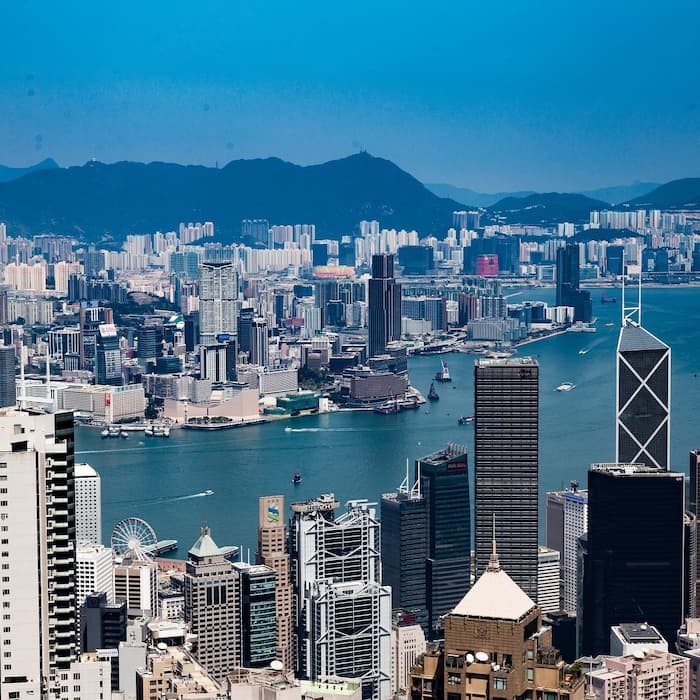
A budget surplus appears to be a rarity in much of the developed world these days, but Hong Kong announced such an outcome this week. With a buoyant IPO market and a recovery from a difficult period in recent years, the Asian city has, so the numbers suggest, regained some of its swagger.
Hong Kong’s return to budget surplus, with tax incentives announced for middle-class households, and moves to further encourage financial services, were broadly welcomed by the wealth management sector this week.
The financial picture is a positive one for wealth managers and institutions such as family offices, practitioners in the sector said.
The 2026-2027 budget shows that the Asian city has started to move away from an austerity period, with a surplus for the first time in four years. Hong Kong has witnessed a rise in the number of initial public offerings (IPOs) and revived its fortunes since the pandemic and political changes of more than five years ago.
Financial Secretary Paul Chan reported a consolidated surplus of
HK$2.9 billion ($371 million), bouncing back from the HK$67
billion deficit that the government had initially predicted.
Among the changes announced, Hong Kong is raising tax
exemption thresholds, increasing allowances and restoring a
salaries tax reduction to the 2024 level of HK$3,000 after
halving it last year. The basic and single parent allowance
will rise by almost 10 per cent to HK$145,000, while
similarly increasing an allocation for married persons to
HK$290,000.
"We are encouraged by the measures announced in the HKSAR
government’s 2026-27 Budget and firmly believe that the tax
regime enhancement for family offices will further consolidate
Hong Kong’s position as a leading global wealth management hub,”
Chi Man Kwan, group CEO of Raffles Family
Office, said in a note.
“We are pleased to see the Government’s clear direction and commitment to advancing the family office sector. The latest study released by the Financial Services and the Treasury Bureau and Invest Hong Kong demonstrates that these efforts are bearing fruit, with Hong Kong recording significant and rapid growth in the number of single-family offices," Chi Man Kwan added.
Patrick Ho, chief investment officer, North Asia at HSBC Private Bank and Premier Wealth, said: “The 2026-2027 budget suggests Hong Kong will stay on course to enhance integration between Hong Kong and mainland China following the direction set by China’s 15th Five-Year Plan.
“A bright spot is that the resilient stock market and the better economy have alleviated concerns about Hong Kong’s public finance, in our view. We think Hong Kong domestic stocks valuation remains inexpensive relative to global equities, with consensus expecting overall earnings to increase 10 per cent in 2026. The market’s average dividend yield is currently at 3.5 per cent, which we feel remains solid.”
Fiscal stance
“Hong Kong’s continued fiscal prudence in its 2026-2027 budget
signals focus on long-term competitiveness over short-term
stimulus. This is despite a return to a small surplus after five
deficits in six years. Stronger-than-expected GDP growth last
year also reduces the need for heavy stimulus. With a firm stock
market and a stabilising housing sector, the economy should
remain on solid footing in 2026,”
Bloomberg economist Eric Zhu said in a statement
this week.
“A buoyant stock market drove the revenue upside. The government said stamp-duty revenue for 2025-2026 likely reached HK$99.5 billion, HK$31.9 billion more than it projected last year,” Zhu continued. “Improved sentiment, supported by a stock-market revival and an emerging recovery in housing, should keep the city on a solid growth track in 2026. We expect the economy to expand 3.4 per cent this year, close to 3.5 per cent in 2025 and near the upper end of the government’s 2.5 per cent to 3.5 per cent projection.”
Intellectual property hub
Among other changes, Hong Kong intends to be more
attractive centre for establishing intellectual property
rights.
Investments include financial support for the Hong Kong Technology and Innovation Support Centre to assist enterprises with patent valuation, expanding the Intellectual Property Department patent examination team to increase its capacity to process patent applications, and establishing a new Intellectual Property Academy to train professionals to help startups with registering and raising funds for their patents.
“These are welcome developments that, together with the recent establishment of the IP Financing Sandbox and the proposed tax deductions for IP acquisition costs, will make Hong Kong more attractive to tech enterprises looking to commercialise and trade their patent assets. Moving forward, we expect to see the government continue to focus on technology and innovation,” Michelle Yee, partner at Johnson Stokes & Master (JSM), a Hong Kong law firm, said.