


Strategy
Expanding Footprint Marks Significant Year For Barclays' International Private Bank
.jpg)
This news service speaks to the head of the international private bank at Barclays to talk about its strategy and recent developments such as the opening of a booking centre in Singapore.
A new booking centre in Singapore, senior appointments and continued gains in assets combine to give Barclays’ private banking and wealth management businesses plenty of momentum. For the international private banking arm, its head is in positive mood.
WealthBriefing sat down a few days ago with Annabelle Bryde (pictured below), head of the international private bank at the lender at the bank’s UK headquarters in London’s Canary Wharf. Bryde, who has been at Barclays for more than five years, was appointed to her role in February 2025.
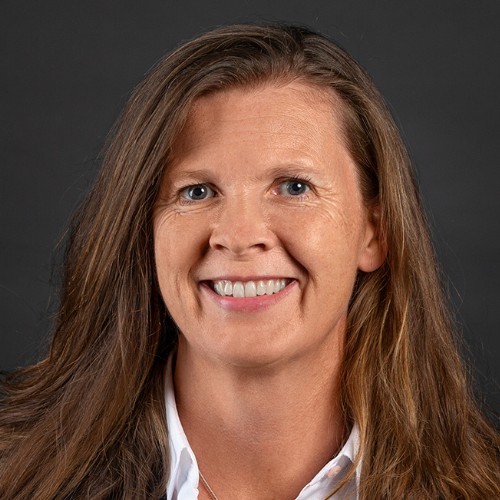
Annabelle Bryde
At the core of the conversation is Bryde’s conviction that in-person advice, whatever the benefits there are of modern tech such as AI, is essential. And that’s certainly the case in challenging times such as today.
“People continue to want advice when geopolitics are in flux and markets are more volatile,” Bryde said.
Managing a business such as this, with multiple booking centres and on-the-ground presences in a variety of markets, takes a lot of work, and plenty of travel to stay close to teams. WB spoke to Bryde a few days after she’d been to Dubai. Her business trips have also taken her to Switzerland and Ireland this year, and there are more to come. “I try to stay in very close contact with all my offices,” she said.
Her job also involves talking to intermediaries such as accountants, lawyers and various advisors so she can stay on top of opportunities. Considering such information, she can adjust budget allocations where appropriate.
Return to Singapore
This year has been significant for the bank, re-establishing a
booking centre in Singapore in what was a return move. Given the
Asian city-state’s significance as a wealth hub, that’s
unsurprising. Barclays Private Bank hadn’t cut ties with Asia,
however. During the interim decade, it has retained business
links in jurisdictions such as India, as well as flying teams in
and out of Singapore regularly. Barclays Private Bank had first
ventured back into the Singaporean market in 2021 with a Private
Banking advisory office.
This news service had been aware for some time that a return to a BC was on the cards. According to Boston Consulting Group this year, Singapore remains the world’s third-largest cross-border financial hub, behind only Switzerland and Hong Kong.
Barclays’ international private bank deals with the non-UK domestic side of things, with locations and booking centres in Switzerland (BCs in Geneva and Zurich), Ireland (BC), Monaco (BC), Dubai (advisory office), India (BC) and now Singapore (BC).
Local nuances require attention, even though common themes emerge from what clients want, Bryde continued. “In Europe, succession can be a more challenging topic because NextGens will not want to [necessarily] go into the family business…in India, they will have much more pride in [working for] the family business,” she said.
“The commonalities are about how to treat the next generation in a fair way,” she said. “In Europe, it could be one part of a family takes on part of a business, and another part receives a portion of wealth…this is also about thinking of wealth as a privilege and also a responsibility.”
Brand and profile
Barclays’ brand is well known of course in the UK and specific
markets, but awareness can vary. In Monaco, for example, the bank
has been very well established there since 1922, and its
executives are prominent figures. Earlier this year, it appointed
Olivier Franceschelli as CEO of its private bank operations in
the European principality, confirming him in the role after
several months serving in an interim capacity.
“In other parts of the world we are a bit less known,” Bryde said, but added that Barclays’ business areas such as the corporate and investment bank are significant levers. The close collaboration between the private bank, investment bank and corporate side is something she stresses. Along with several of its peers, Barclays clearly subscribes to the “one-bank” model.
“That permeability across the whole group works very well for us at Barclays,” she said, noting the importance cross-referrals of client business between divisions.
Structure
The achievements of the international private bank and its
domestic UK sister are more prominent again after Barclays
restructured divisions in 2023. There are five operating
divisions: Barclays UK; Barclays UK Corporate Bank; Barclays
Private Bank and Wealth Management; Barclays Investment Bank; and
Barclays US Consumer Bank.
Prior to the formalisation of Private Banking and Wealth Management becoming one business the financial results for these separate divisions sat within other areas in the bank. However, that changed from the first quarter of 2024.
In its second-quarter and half-year 2026 figures, Barclays said total income rose 2 per cent year-on-year in the half-year period to £713 million ($944 million). Net new assets under management were £1.8 billion in H1 2026, easing a touch from the same half-year period in 2025. Total client assets and liabilities increased to £230.2 billion at the end of June this year, rising £2.6 billion from the end of December.
Knowing clients closely
The importance of being close to clients clearly motivates Bryde.
“We want the client to feel that we have one entry door. If
clients move that can trigger change in the bank, but we try
to avoid it,” she said.
“We are looking for people [employees] who want a good home for their clients,” she said. Barclays tries to achieve this outcome by making its people feel empowered, listened to and have a measure of autonomy,” Bryde said.
WB asked Bryde, as it has of other bankers, whether clients are holding on to cash amidst all the economic uncertainty. “At the moment we see a higher-than-normal cash percentage…rates are attractive and geopolitics are currently adding a level of uncertainty.”