


Company Profiles
Easing Expense Management For Cross-Border Wealth Professionals – In Conversation With Summit
Eyeing growth among clients such as family offices, Singapore-headquartered Summit is a firm that gives a real-time, centralised view of transactions such as multi-currency reimbursements. For readers well-used to regular foreign trips and handling expenses and other payments, the need to do these tasks efficiently can be a major challenge.
Cross-border work trips have their challenges – some of the most significant are filing accurate and quick expense claims that pass the compliance and accounting health test. Compounded over time, mistakes and delays can cost considerable sums of money.
In a region such as Asia, with private bankers and other wealth management professionals jetting to and from countries such as Thailand, Singapore, Malaysia and Vietnam, expenses management and converting accurately into a particular currency becomes a time-consuming chore. When firms also use foreign contractors and settle invoices in a variety of currencies and locations, it’s easy to see how complex the task becomes.
Singapore-based firm Summit, founded 18 months ago, argues that some of today’s biggest compliance and regulatory risks are increasingly embedded in everyday finance workflows, especially for companies managing cross-border teams and multi-currency reimbursements. It is a world that those in private banking, for example, will know well.
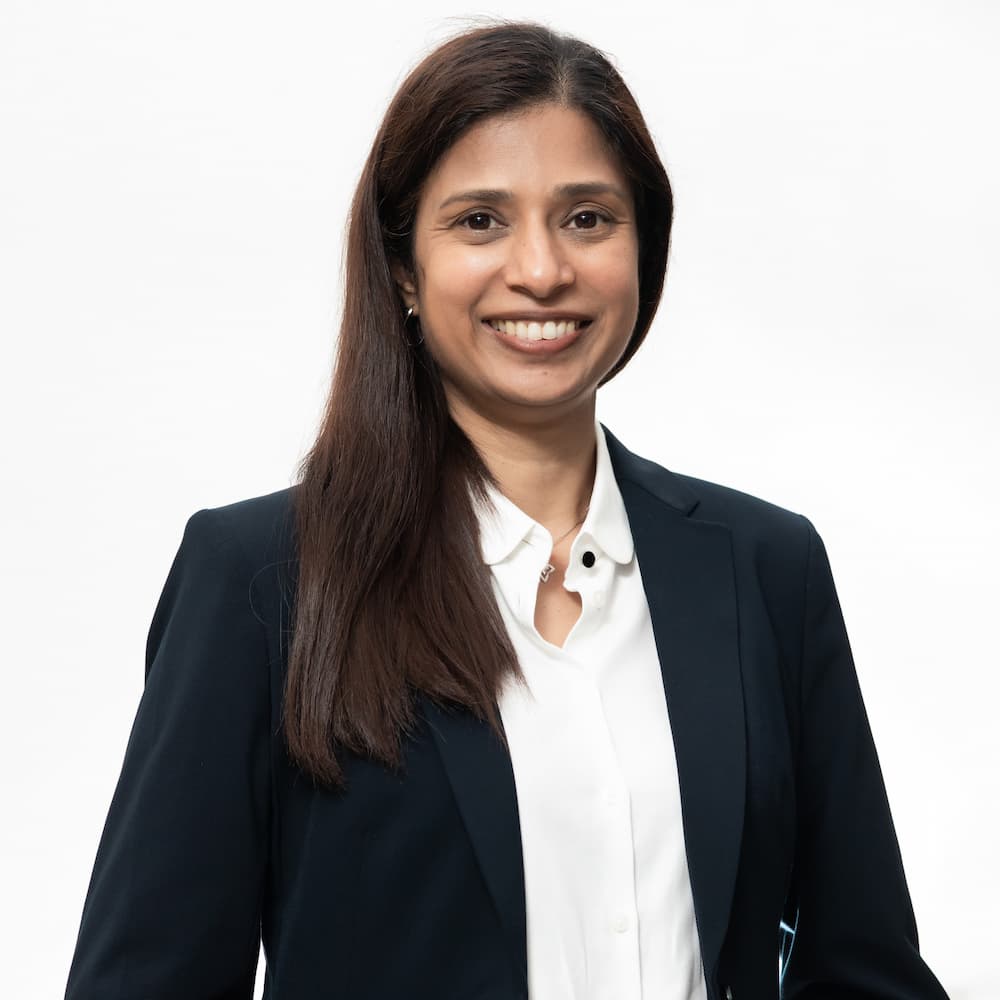
“Technology is advancing and making all this a lot easier. Most businesses are looking at very strict cost controls and at the small things that can help them to get things right...saving hundreds of thousands of dollars,” Summit’s CEO Jo-Ann Chung (main picture) told WealthBriefingAsia in a recent call.
The platform gives a real-time, centralised view of transaction statuses – approved, rejected, missing info, or ready for payment.
There is the case of a Singapore-based trading firm (a Summit client). At one point its employees manually handled reimbursements, approvals, and foreign exchange exposure across 11 legal entities. There were claims in five currencies – Singapore dollar, Hong Kong dollar, Korean won, Chinese renminbi, and Vietnamese dong.
Accidentally miscalculating conversion rates can become a financial – and reputational – nightmare. In the case of the Singapore-based firm, it was using emails, spreadsheets, and suffering from delayed signoffs. Problems surfaced at month-end, when visibility was already lost. Eventually, the firm could slash reimbursement processing time by almost two thirds (63 per cent) across 540 claims in a month.
Summit says it uses AI tools such as smart capture, smart approval workflows, and anomaly detection to streamline processes. It also employs AI to automatically allocate expenses to the correct cost centre, department, and category, even when this information isn't directly provided on the invoice. A policy checker feature allows companies to upload their expense policies, so that submitted claims can be checked in real time.
Details such as hard-to-understand paper receipts that aren’t clear, fluctuating currency rates and delays in filing expenses all add up to cost.
In Singapore, the jurisdiction’s “shared services” structure and its tighter rules on family offices mean that FOs must prove their economic substance. And that means auditable, credible footprints – including expenses. Without fulfilling such tests, family offices could lose out on favourable tax treatment and be hit with a 17 per cent corporate tax in Singapore, Chung said.
“Firms must categorise expenses and make sure they’re available for audit,” she said. Organisations cannot afford to wait until a year-end to sort out their expenses to find that there are gaps. This also reduces the risks of fraud and money leaking from a business, she said.
With an extensive career in financial services, Chung brings experience to her role. She has worked at digital lending and payments fintech provider WLTH, as chief product officer. Prior to that, Chung was product head for MYOB (Mind Your Own Business Group Limited), responsible for product strategy and development of the company's financial services solutions spanning payments, loyalty, and finance for businesses. Before Summit, Chung joined Spenmo in 2021 as chief product officer, ending up in 2023 as acting CEO.
This is a job where lots of in-person meetings with prospects and clients are essential. Chung said she and colleagues speak regularly to institutions of all kinds; they have probably had more than 1,500 client conversations in total.
“We are starting to see growth because we are really focused on helping clients,” she said.
“What shocks us is that there are a number of large businesses…more than 1,000 people that are doing these things in manual processes,” she said. “We saw that there was this gap in the market.”
Summit works with family offices and other professional services
entities, not-for-profit groups, and educational institutions. It
has 30 staff. The amount of expenses handled via its platform has
risen by about 50 per cent in its latest quarterly reporting
period from the preceding quarter.
The scale of the problem
The numbers are well documented. According to the Association of Certified Fraud Examiners (ACFE) 2024 Report to the Nations, the world's largest global study on occupational fraud, covering 1,921 real cases across 138 countries, a typical organisation loses 5 per cent of its annual revenue to fraud each year, amounting to an estimated $5 trillion globally.
For Singapore family offices specifically, the risk extends into loss of tax-exempt status. A single-family office that fails to meet its annual Local Business Spending threshold loses its zero per cent tax exemption under Section 13O or 13U for that financial year, and reverts to Singapore's standard corporate tax rate of 17 per cent. For a S$250 million ($194.7 million) AuM Singapore family office, missing MAS tax incentive conditions can mean over S$1 million in avoidable annual tax. This is not due to performance, but real-time operating visibility gaps.
Among direct peers in the space are Expensify and SAP Concur, although Summit argues that these firms are traditional, enterprise-grade tools built for large, complex organisations with long implementation cycle and rule-heavy workflows. They solve for scale and compliance but not for compliance intelligence, Chung said.
"As for the broader market, yes, we do expect more solutions in
this space to emerge. The macro environment is pushing businesses
to tighten spend, gain visibility and demonstrate operational
rigour to investors and regulators alike. That demand will
attract new entrants. What we believe differentiates Summit is
the focus on using AI to surface compliance risks in real time,
rather than automating a manual process that was already broken,"
Chung continued.
Family office focus
Chung said that the family office space is an important one for her business.
"Family offices are a clear priority, particularly in Singapore. The city's single family office count surged from around 400 in 2020 to over 2,000 by end of 2024, driven by inbound capital from China, India, Indonesia and the Middle East," she said.
"The timing is significant. From January 2025, MAS tightened economic substance requirements under Sections 13O and 13U, which give SFOs their zero per cent tax advantage," she said. Chung reiterated the point that SFOs must now meet Local Business Spend (LBS) thresholds to qualify for the tax incentives. If they miss the annual LBS then they lose the exemption.
Another force in favour of Singapore's family offices, she added, is global instability. "Geopolitical instability in the Middle East is also pushing more wealthy families to diversify into Singapore and Hong Kong. These incoming offices are setting up fresh, without legacy systems," she said – and that's where Summit can step in.