


Company Profiles
Cross-Border Flows, Complexities Fuel Growth For Hong Kong-Headquartered FGA Trust
With Hong Kong now pulling ahead of Switzerland as the world's largest cross-border financial hub, it seems appropriate for this news service to interview a firm right in the centre of the action in the Asian city. FGA Trust, headquartered in Hong Kong, which has a global reach, talks about its business case and opportunities.
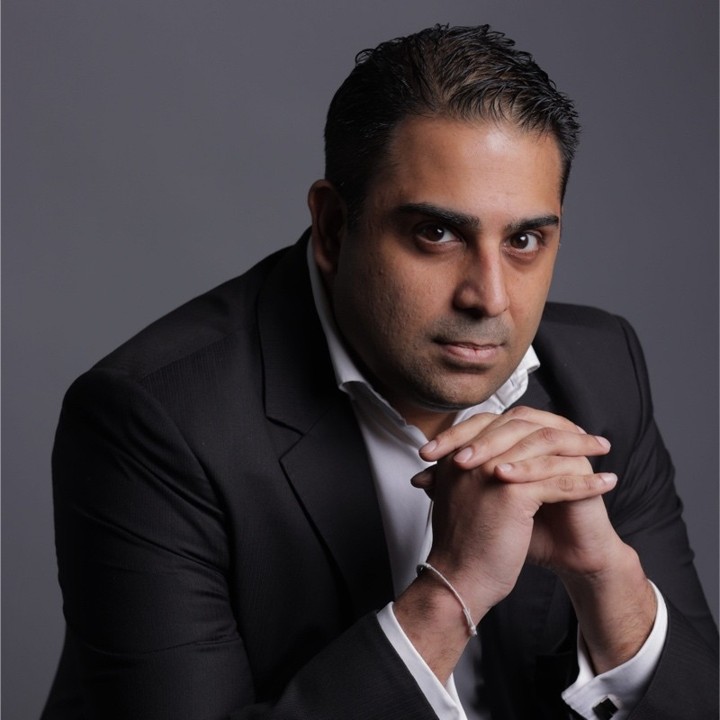
This news service recently spoke to Kavi Harilela (main picture), who is director at Hong Kong-headquartered FGA Trust. The business won a thought leadership award at the WealthBriefingAsia awards ceremony in Singapore. The happy occasion was a chance for WealthBriefingAsia to find out more about FGA Trust, the ways it seeks to drive change, and views about the sector.
WBA: FGA Trust is a Hong Kong-licensed wealth planning and fiduciary firm. Can you tell me when it was established, who leads it, how many staff it has, how many offices and jurisdictions it engages with?
Harilela: FGA Trust is a Hong Kong-licensed trust and fiduciary services company – TCSP Licence No. TC008341 – with a leadership team that collectively brings over 25 years of cross-sector finance experience spanning fiduciary law, investment banking, and financial technology.
Beyond our Hong Kong headquarters, we have an operational presence in North America, New Zealand, and Singapore. We are currently evaluating a Dubai office, which reflects the growing demand we are seeing from Middle Eastern and internationally mobile clients. Our broader reach is extended through a network of banking and custodian partnerships - including global digital asset custodians and regional financial institutions - allowing us to serve clients across APAC, the Americas, the Middle East, and Africa. In a world where the Common Reporting Standard (CRS) has made every cross-border financial arrangement visible to tax authorities, the quality of your compliance infrastructure matters as much as the quality of your legal structure. We have invested heavily in both.
WBA: Where does FGA operate – is it only Hong Kong and the surrounding region, or does it also look further afield?
Harilela: Hong Kong is our anchor, but the world is our operating theatre. Limiting a modern trust company to one region is, frankly, a disservice to clients whose lives, assets, and ambitions span multiple continents.
Our most active corridors today are Hong Kong to Southeast Asia, Hong Kong to the Middle East, and Hong Kong to North America – the latter driven by the significant wave of families relocating between Asia and Canada. We are also building aggressively into the Asia-Africa corridor. Our recent appointment as an Eligible Introducer for ABC Bank in Mauritius gives us direct access to Africa's $3.4 trillion economy, offering Asian HNW individuals structured pathways into one of the world's last great frontier markets. What underpins every one of these corridors is the same discipline: CRS-compliant structuring from day one. When a family's assets span six jurisdictions, the question is never simply where to hold wealth - it is how to hold it in a way that is fully transparent to the relevant authorities, legally efficient, and built to last across generations. That is precisely what FGA Trust is designed to deliver.
WBA: You won a thought leadership award at the WBA Asian awards in Singapore. What areas of thought leadership do you engage in and why?
Harilela: Winning at the WealthBriefingAsia Awards 2026 across categories including "Digital Assets Offering or Service" and "Independent Trust or Fiduciary Company" was gratifying, but the real measure of thought leadership is whether you are changing how the industry thinks – not just how it talks.
Our thought leadership centres on two convictions that we believe the industry has not yet fully absorbed. The first is that CRS (Common Reporting Standard) has permanently altered the landscape of global wealth management. With over 100 jurisdictions now exchanging financial account information automatically, the era of opacity is over.
(Editor, as a reminder: CRS, which was started in 2016 – drawing in more countries over time – is an international agreement among jurisdictions to transfer financial information to help foil tax evasion and other illicit financial flows.)
Two developments illustrate how serious this has become. In the UK, the abolition of the non-domicile regime from April 2025 means that long-term UK residents – including a significant number of Hong Kong families with UK ties – are now taxed on their worldwide income and gains as they arise, with overseas trusts no longer offering the protection they once did. Families who assumed that their offshore structures were insulated have discovered, often abruptly, that they are not. In China, the State Taxation Administration has moved decisively from policy readiness to active enforcement.
Since 2025, tax authorities have been systematically cross-referencing CRS data – which covers accounts in Hong Kong, Singapore, Australia, Canada, and most of Europe – to identify unreported overseas income. Shanghai and Zhejiang have already disclosed cases where individuals were contacted over undeclared foreign assets, and the STA has explicitly called for self-inspection of overseas income for the 2022 to 2024 period.
For Chinese tax residents, overseas income is taxable regardless of whether it is ever remitted to China. The message is unambiguous: the data exists, the authorities are using it, and the window for voluntary correction is narrowing. What this means in practice is that clients who have not structured their global holdings within a properly governed, CRS-compliant trust framework are carrying risk they may not fully see. FGA Trust's role is to remove that risk – to provide a structure that is not only legally sound but is built to be transparent, reportable, and defensible across every jurisdiction in which a client has exposure. The second conviction is that AI is redefining what a trustee can and should do. We engage in thought leadership on these topics because an informed client makes better long-term decisions, and better decisions build the kind of enduring relationships that define a serious fiduciary institution.
WBA: What sort of projects does FGA have in the pipeline?
Harilela: The most consequential development in our pipeline redefines how clients interact with their trust on a daily basis. We are expanding our asset-backed credit card programme – having already issued over 180,000 cards – to allow clients to collateralise their portfolios and fund their global lifestyles directly from within their trust structure. No liquidation. No bureaucratic delays. No bank relationship manager to call on a Friday afternoon. The trust becomes a living, breathing financial platform rather than a dormant legal document.
Alongside this, we are deploying AI-driven tools within our client portal that provide real-time modelling of tax efficiency and succession scenarios across multiple jurisdictions. These tools do not make investment decisions – that is not the trustee's role. What they do is give trustees and clients a dynamic, continuously updated picture of their compliance position and structural health across every jurisdiction where they hold assets. In a post-CRS world, where tax authorities can see your global account balances in near real time, having that clarity is not a luxury. It is the minimum standard of care a serious wealth manager owes its clients.
WBA: A new Hong Kong tax bill as part of 2026/27 legislation covers areas such as property stamp duty, salaries and profits taxes, etc. From the point of view of HNW individuals and their advisors, what are the most significant elements in it and why?
Harilela: For high net worth families and their advisors, one piece of legislation towers above everything else in the current cycle: the Inland Revenue (Amendment) Bill gazetted in June 2026, which dramatically upgrades the tax concession framework for Family-owned Investment Holding Vehicles (FIHVs).
The headline change is the expansion of Schedule 16C qualifying assets to include digital assets, overseas immovable property, private credit, and carbon credits. This is not a minor technical adjustment – it is a recognition that modern family wealth looks nothing like it did a decade ago. The removal of the 5 per cent threshold on incidental transactions further simplifies compliance considerably, and the replacement of the net asset value test with a cleaner asset value calculation removes a long-standing structural friction. Crucially, the changes take retroactive effect from the 2025/26 tax year, creating an immediate planning window.
The significance of this cannot be overstated when viewed against the global backdrop. As the UK tightens its grip on non-domiciled residents and China accelerates CRS-driven enforcement of overseas income, Hong Kong is moving in the opposite direction – actively broadening the scope of tax-efficient structures and removing friction for internationally mobile families. A Hong Kong trust, combined with a properly structured FIHV, now offers a zero per cent profits tax concession on a wider range of assets than at any point in the jurisdiction's history, with no requirement to obtain regulatory approval in advance and with retroactive effect already in place. Our advice to clients is unambiguous: act now.
By wrapping an FIHV within a Hong Kong trust structure, families can secure that tax efficiency while simultaneously ring-fencing assets from creditors and embedding them within a robust, multi-generational succession framework. The combination of tax efficiency, legal protection, and common law certainty – under a system with over 150 years of jurisprudence – is simply not replicated anywhere else in the region.
WBA: Boston Consulting Group data shows that Hong Kong is now ahead of Switzerland as the world's largest cross-border financial centre. How do the reforms and tax measures play a part in that? What are the prospects for FGA, and what risks need to be borne in mind?
Harilela: The BCG figure – $2.9 trillion in cross-border wealth booked in Hong Kong, narrowly overtaking Switzerland in 2025 – is not a coincidence. It is the direct consequence of deliberate, sustained policy reform. Capital does not move to a jurisdiction because of its scenery. It moves because the legal framework is robust, the tax treatment is rational, and the regulatory environment is predictable. Hong Kong has delivered on all three counts, and the FIHV reforms are the most recent proof point.
For FGA Trust, the outlook is one of significant, technology-enabled growth. The influx of family offices and UHNW individuals into Hong Kong generates a continuous pipeline of clients who require institutional-grade structuring, and we are positioned to serve them at scale through our AI-powered platform. The risks, however, are real and must be stated honestly. Geopolitical volatility remains a persistent variable.
The increasing sophistication of CRS enforcement means that poorly structured arrangements will face scrutiny that they were never designed to withstand. Our response is what we call "compliance-by-design" – AI systems that ensure that our KYC and AML protocols are continuously updated and impregnable, so that our clients' structures are defensible under any regulatory environment, not just the current one.
WBA: There are business "corridors" between financial hubs – HK and Switzerland, HK and Singapore, HK and Vancouver. How do you see these connections evolving? What demands do they create for your business in terms of hiring and talent?
Harilela: The corridors are evolving from simple capital flows into complex, multi-dimensional relationships that involve lifestyle, residency, succession, and digital asset management simultaneously. A family with operations in Hong Kong, a second home in Vancouver, and investment accounts in Singapore does not need three separate advisors – they need one unified structure and one platform that speaks to all three jurisdictions in real time, with full CRS compliance built in at every layer.
This is precisely why we have expanded our operational footprint and why we are evaluating a Dubai presence. The talent demand this creates is genuinely new. We are not looking for traditional trust lawyers alone – we need professionals who understand cross-border tax treaties, digital asset custody, AI compliance tools, and the human dynamics of multi-generational family governance.
Retaining this talent in Hong Kong's competitive market requires more than compensation; it requires a culture of innovation. We attract people who want to build the future of fiduciary services, not administer its past. In a world where every major wealth management platform is integrating AI, the firms that will win the talent war are those that give their people the most sophisticated tools to work with.
WBA: The world is a volatile place – Middle East tensions, Ukraine, trade wars. What structures and solutions are clients looking for, and why do trusts resonate?
Harilela: In volatile times, the first question every serious wealth holder asks is not "where can I generate the highest return?" It is "where is my wealth genuinely safe?" The answer, increasingly, is a properly structured Hong Kong trust.
A trust works in volatile environments for a fundamental legal reason: it separates beneficial enjoyment from legal ownership. If a client faces political expropriation, sudden regulatory shifts in their home country, or unforeseen personal liabilities, assets held within a Hong Kong trust remain insulated – protected by a common law system that has withstood over 150 years of legal challenge. Beyond asset protection, our Immigration Trust programme has seen particular demand from families navigating cross-border relocation.
When a family moves from a high-tax jurisdiction to a new country of residence, the transition period is one of maximum vulnerability – exit taxes, new CRS reporting obligations, and sudden exposure to foreign tax authorities can erode wealth rapidly if the structure is not in place before the move. A well-executed Immigration Trust, administered by a trustee who uses AI to monitor the client's evolving compliance position across jurisdictions in real time, provides the holding framework that bridges that transition safely.
WBA: Hong Kong's status as a global wealth centre is undeniable. What is the outlook for FGA in tapping into this growth? What challenges exist?
Harilela: The opportunity in front of us is generational, and I do not use that word lightly. Hong Kong's IPO market, its role as the primary gateway for Greater China capital, and its newly-reinforced status as the world's largest cross-border wealth booking centre are creating a continuous stream of newly-minted UHNW individuals who require sophisticated structuring from day one. FGA Trust is built to serve exactly this client.
Our growth strategy is technology-first. By deploying AI across our onboarding, compliance, and client reporting functions, we can scale our service capacity without a proportional increase in headcount. This is critical in Hong Kong, where the cost of niche talent is significant and rising. The challenge is not finding clients; the pipeline is strong. The challenge is building the operational infrastructure to serve them at the standard they expect, while keeping our compliance architecture ahead of the regulatory curve.
As CRS enforcement becomes more sophisticated and as tax authorities invest in their own analytical tools to identify anomalies, the gap between firms with robust, technology-driven compliance and those relying on manual processes will widen rapidly. We intend to be firmly on the right side of that gap.
WBA: Are there other points you want to make on topics that you think are important?
Harilela: The role of the trustee is being fundamentally redefined, and the industry has not yet fully reckoned with what that means. Historically, a trustee was an administrator – someone who held assets, followed instructions, and produced annual accounts. In the digital era, that model is no longer sufficient.
Today, a trustee must be a real-time compliance monitor, a cross-jurisdictional reporting engine, and a proactive steward of the family's structural health. AI makes this possible in a way that was simply not achievable five years ago. At FGA Trust, our AI systems continuously track the regulatory and tax environment across every jurisdiction where our clients hold assets.
They flag changes in CRS reporting requirements, model the impact of new tax legislation, and alert trustees to structural vulnerabilities before they become problems. This is not about replacing human judgment – the fiduciary relationship remains fundamentally human. It is about giving the trustee the information they need to exercise that judgment well, at the speed and scale that modern global wealth demands. The families who will be best served in the next decade are those who choose a trustee that has already made this transition. That is the standard we hold ourselves to at FGA Trust.