


WM Market Reports
Asian HNW Individuals Want Hybrid Offerings More Than Peers Around The World - Study
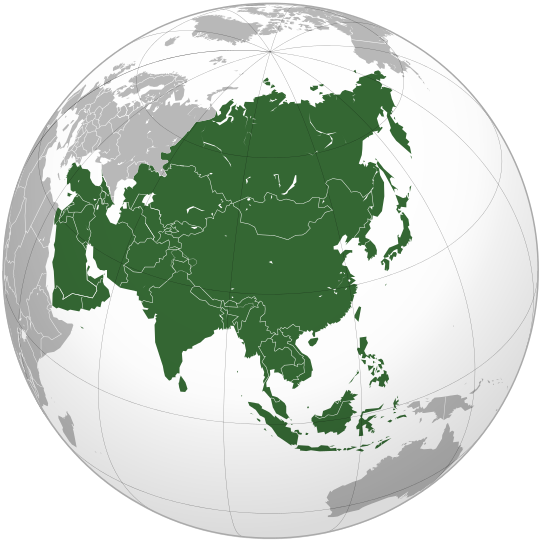
A report sheds light on how wealthy individuals in Asia view technology offerings in wealth and in particular, the "hybrid" models that blend the human and the digital sides.
A survey of Asian countries shows that high net worth individuals in the region strongly favour “hybrid” advice that marries technology and the human touch, while many firms are struggling to keep pace with demand for digital offerings. Asian HNW individuals are keener on hybrid offerings than peers in other regions.
Investment performance was strong last year but satisfaction with wealth managers declined because clients aren’t any longer satisfied with returns – they want a much broader offering. Traditional firms risk losing ground to technology challenges, according to Capgemini in its 2017 Asia-Pacific Wealth Report.
Among HNWIs in Asia-Pacific (excluding Japan), 90.1 percent say hybrid advice is significant in their decision to increase (or decrease) assets with a primary wealth management firm over the next 24 months, as compared with only 67.4 percent in the rest of the world. In Japan, 66.7 percent of HNWIs say hybrid advice is a significant factor in their decision to allocate assets.
“Many Asia-Pacific wealth management firms are well into their transformation journeys, but 42.8 per cent have not progressed beyond the proof-of-concept stage, and 21.4 percent have not begun any hybrid advice initiatives,” the report said.
The report comes at a time when wealth managers, facing potential challengers from e-commerce giants such as Alibaba and Tencent, as well as fintech startups, are trying to figure out how fully digital their offerings should be. The rise of so-called robo-advisors in recent years has prompted a flurry of activity and commentary. Banks such as UBS and DBS have brought out digital offerings, but the field remains highly differentiated.
HNW individuals in Asia-Pacific, excluding Japan, led the world in demand for hybrid wealth management advice (49.6 per cent), compared with Europe (49.1 per cent), Japan (47.6 per cent), Latin America (45.6 per cent), and North America (35.1 per cent.) HNW individuals in Indonesia, Hong Kong, and Japan call for hybrid advice the most, while Japan, Hong Kong, and Australia are leading demands for outright automation of some wealth management capabilities.
“Many Asia-Pacific wealth management firms are well into their transformation journeys, but 42.8 percent have not progressed beyond the proof-of-concept stage, and 21.4 percent have not begun any hybrid advice initiatives,” Anirban Bose, Head of Global Banking and Capital Markets at Capgemini, said.
Chinese HNW individuals (52.1 per cent) are most inclined toward a hybrid approach, the report continued.
Compared with firms in the rest of the world, Asia-Pacific wealth management firms focus more on achieving operational efficiency and regulatory compliance versus revenue. They also lag behind their North
American and European peers in hybrid program effectiveness - an issue compounded by lower satisfaction with hybrid advice from Asia-Pacific HNW individuals in the under-served $1 million-$5 million segment, compared to those in the more affluent segments.
Wealthy Asians, excluding those in Japan, show a higher proclivity to wealth offerings from “bigtech” firms at 72.5 per cent compared with 50.5 per cent from the rest of the world.
Among HNW individuals in Asia-Pacific (excluding Japan), 90.1 percent say hybrid advice is significant in their decision to increase (or decrease) assets with a primary wealth management firm over the next 24 months, as compared with only 67.4 percent in the rest of the world. In Japan, 66.7 percent of HNWIs say hybrid advice is a significant factor in their decision to allocate assets.
The latest Capgemini focuses on nine core markets: Australia, China, Hong Kong, India, Indonesia, Japan, Malaysia, Singapore, and South Korea. The market-sizing model includes 18 countries and territories (i.e., the 9 core markets plus New Zealand, Kazakhstan, Myanmar, Pakistan, Philippines, Sri Lanka, Taiwan, Thailand, and Vietnam).